
Housing & water Supply system
Paribartan received funding support from SELAVIP for construction of new housing and drinking water system at two slums of Berhampur city. The project was successfully completed during November 2024, and 35 new housing units were constructed for ultra-poor families residing at Uttaramukhi and Berma Colony of Berhampur Municipal Corporation. Each household was connected with a water supply. The Paribartan team, including a civil engineer, project coordinator, Pragati SHG of Berhampur Municipal Corporation (Local Self Body), and the identified beneficiaries participated in the project. 35 ultra-poor beneficiaries (30 families from Uttaramukhi Colony and 5 families from Berma Colony) were selected by the women group adopting a wealth ranking matrix, which was vetted by the Paribartan team followed by physical verification of their housing condition and economic situation. The beneficiaries were staying in a filthy environment with poor housing conditions; even the roof was clad with polythene. They were engaged in construction work as daily labourers and faced difficulties meeting their families ' minimum needs and requirements. The women SHGs, with participation of the identified beneficiaries, took the decision regarding the construction work. They monitored the progress of the housing project in close coordination with Paribartan and the technical team. Under the supervision of the Engineer-in-Charge, the construction work was completed on 15th November 2024. Skilled masons and labourers were engaged in the construction work. The beneficiaries contributed their labour for digging pits for pillars, earth work, carrying bricks, unloading materials, etc. A committee was formed involving the beneficiaries, and they monitored the progress and quality of materials. The building materials — cement, TMT bars, sand, cement bricks, and blue/black metal chips — were purchased from authorized vendors/dealers from the local market. The committee members maintained records of materials purchased and monitored the quality of building materials in consultation with the Engineer-in-Charge. By continuous persuasion by the implementing partner, Pragati SHG, along with the beneficiaries, all 35 beneficiaries received their Record of Right. Patta was given to all identified beneficiaries and was issued by BeMC.
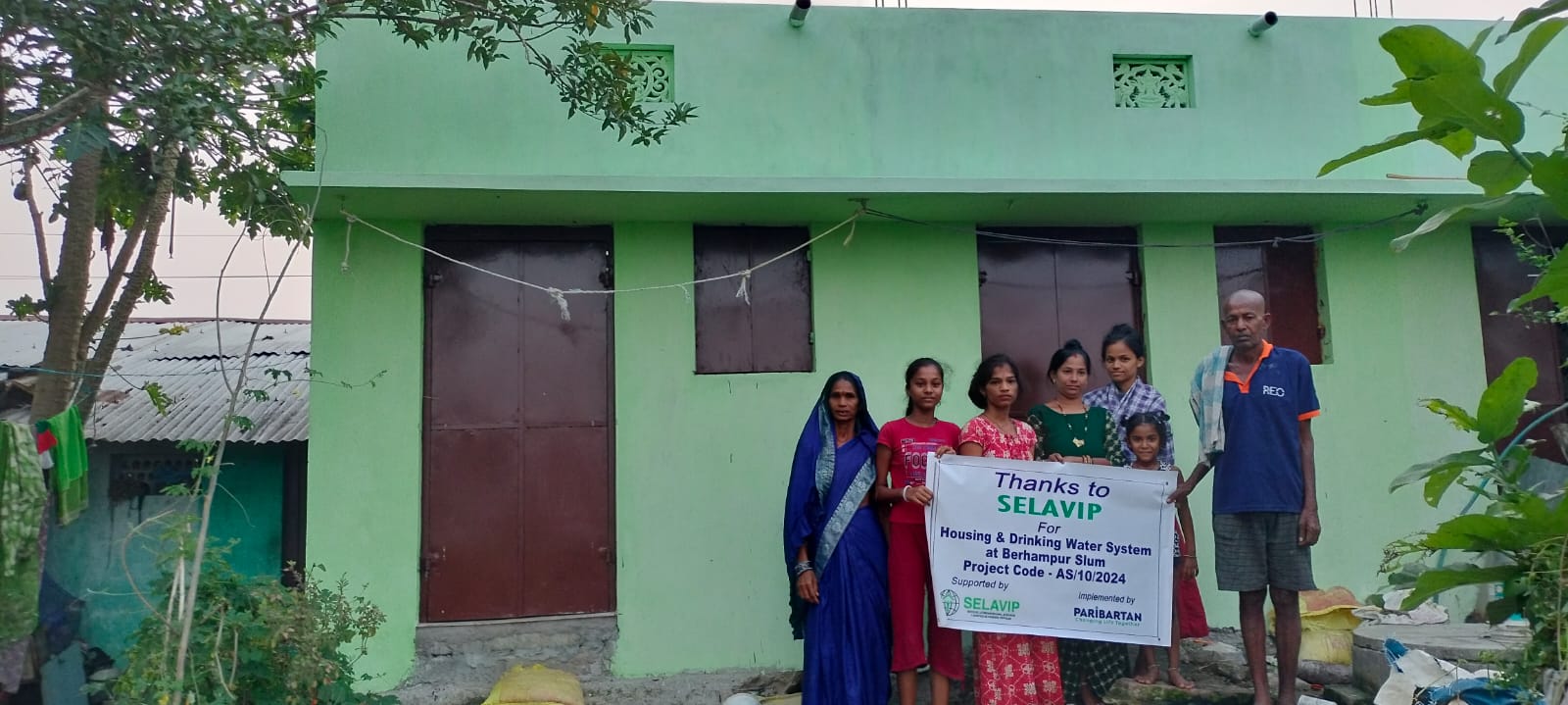

In the long run, this would enable and facilitate strengthening of people’s organisations to ensure their interests, entitlements, and rights. The women will actively participate in the decision-making process at family and community levels. The identified 35 Dalit families were supported with a new house measuring 150 sq. ft. with toilet and water supply facility. The identified households have land titles measuring 4 decimals and contributed their labour for the construction. It is expected that there will be tangible enhancement of the Human Development Index in the context of dignified life, meeting the basic need of housing, better study environment, reduced incidence of girls’ school dropout rate, and more gender parity, as most of the households are women-headed.
HIV/AIDS Awareness Generation
Since 2017, we have successfully implemented a social mobilisation and awareness-raising initiative in Pallahara Block of Angul, Odisha, focused on preventing the spread of HIV/AIDS and STIs. The project specifically targeted children and adolescents—both in school and out of school—along with teachers, migrant youth, and members of the tribal community.
The core objective was to curb the spread of HIV/AIDS through a multi-pronged approach that included school-based activities, community-level awareness programmes, peer education, teacher training, and enabling communities to access harm-reduction services. A strong emphasis was placed on behavior change communication to ensure lasting impact.
A key component of the initiative was empowering school-going tribal students with accurate information about HIV/AIDS—its modes of transmission, prevention methods, and the importance of making informed and responsible decisions related to their sexual and reproductive health (SRH). The students were also encouraged to share these positive and relevant messages within their communities.
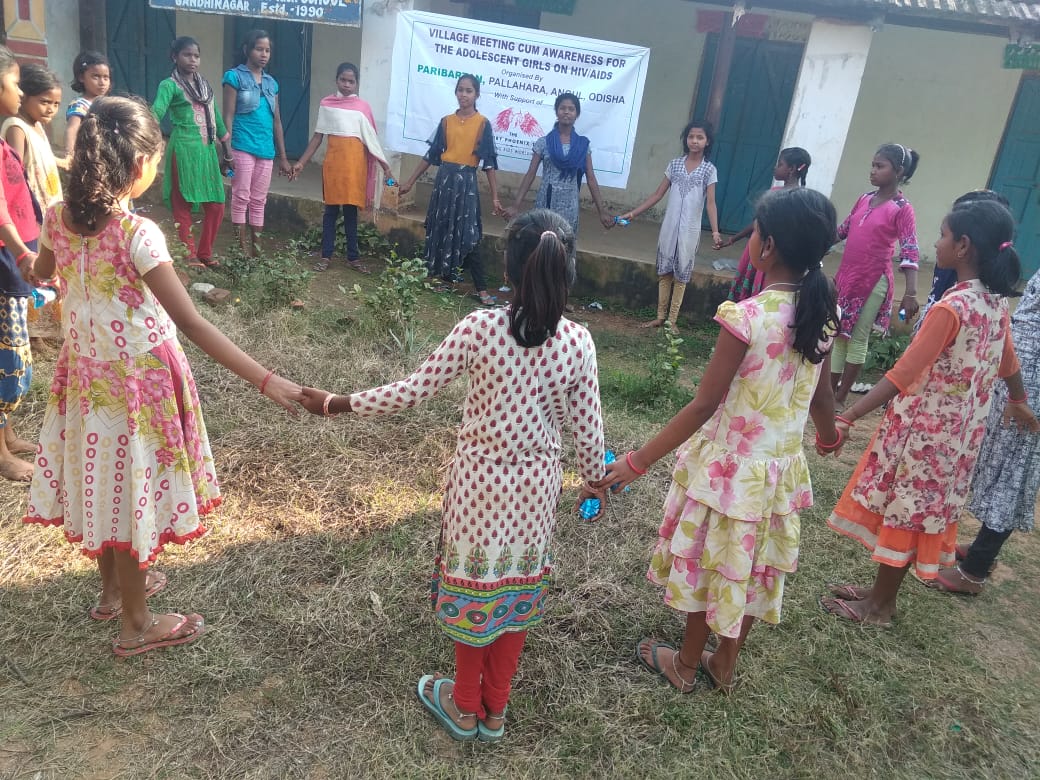
We adopted a unique adolescent-led strategy, working with both in-school and out-of-school youth—particularly adolescent girls. Activities included peer educator training, life skills and SRH education, and the organisation of community-level events and dialogues to disseminate correct information about HIV/AIDS. Our teams collaborated closely with trained teachers and peer educators, delivering services with dedication and cultural sensitivity.
This initiative has strengthened the capacity of adolescents and community members alike to understand HIV/AIDS and adopt health-seeking behaviors, contributing to a more informed, supportive, and resilient community.
Consumers Awareness Programme
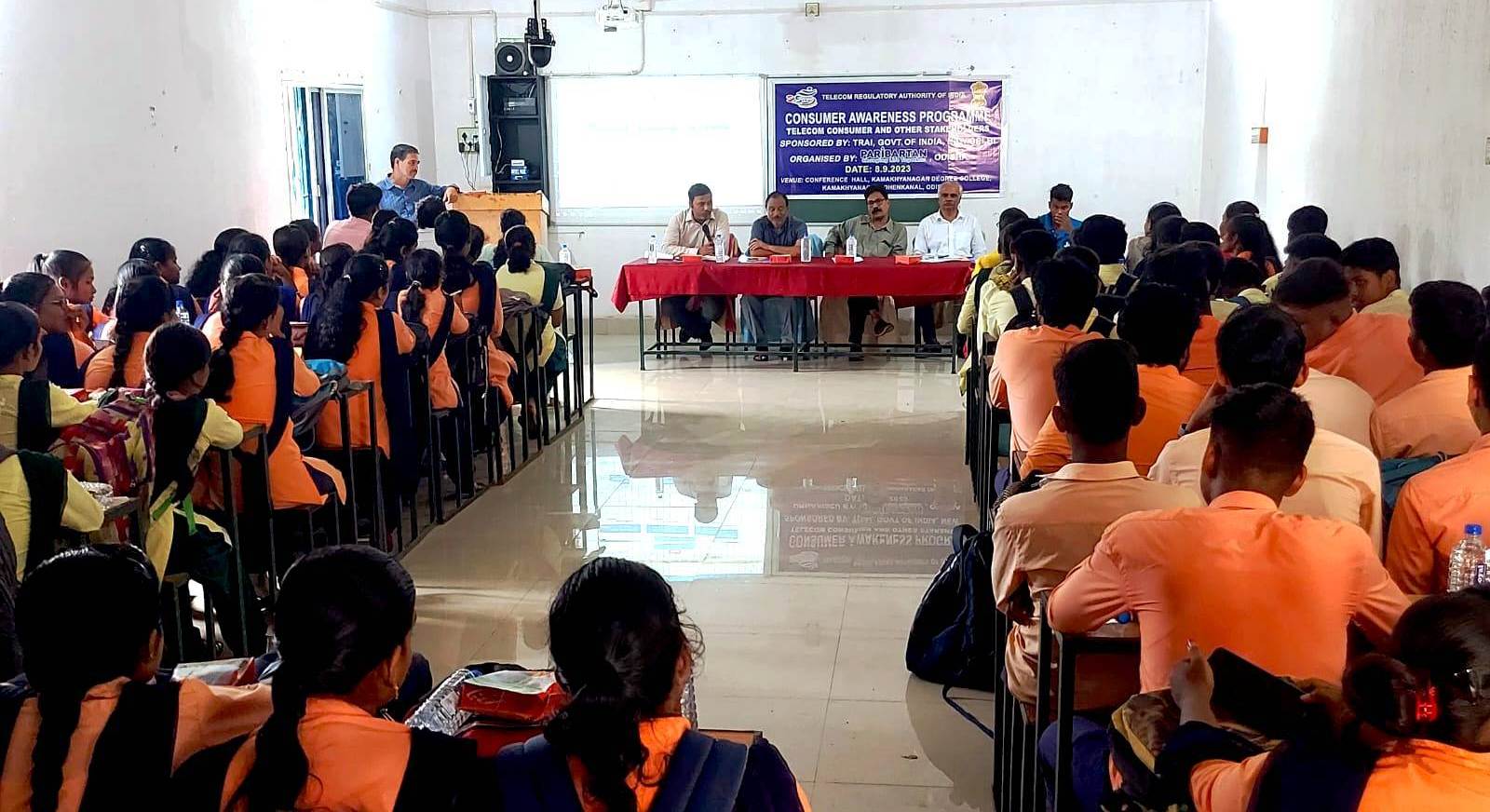
Paribartan, as one of the Consumer Advocacy Groups, collaborated with the Telecom Regulatory Authority of India (TRAI), Government of India. During the year 2021-22, we successfully organized six Consumer Awareness Programmes (CAP) across six districts. Participants were educated about the provisions of various consumer-centric regulations, directions, and matters related to value-added services, Unsolicited Commercial Communication (UCC), Mobile Number Portability (MNP), Complaint Redressal Mechanisms, Data Services, and Tariffs.
Participants were also informed about the benefits of various mobile apps such as the TRAI My Speed App, TRAI DND 3.0, and the MyCall App. During the awareness programmes, information was provided to safeguard consumer interests and rights. Representatives highlighted various measures to protect consumers and explained how to avoid fraudulent activities, along with information on cyber security. Telecom service providers also responded to the queries of subscribers.
OTHER ACTIVITIES
Relief and Disaster Management
In January 2020, our team successfully conducted a research study on the existing practices and responses adopted by various stakeholders—including state and non-state entities, as well as international relief agencies—to address challenges during and after disaster situations and to support the return to normalcy. The primary focus was on identifying innovative products, services, and processes introduced by these stakeholders and communities that have the potential to enhance the efficiency and effectiveness of disaster prevention, preparedness, and response.
The research was carried out with funding support from SEEDS, in partnership with the Asia Disaster Reduction and Response Network Tokyo Innovation Hub (ATIH) and Elrha’s Humanitarian Innovation Fund (HIF).